
We all have that one outfit we reach for constantly—and knowing how to take care of clothes is the secret to keeping it looking new. Maybe it is a crisp cotton kurta that keeps you comfortable through a humid commute, or a tailored blazer that gets you through back-to-back office meetings. Yet, after just a few months, colours start looking tired, seams lose their shape, and delicate threads begin to pull.
Learning how to take care of clothes does not require expensive dry-cleaning bills or hours of extra effort. With a few mindful clothing care tips, you can protect your favourite garments from daily wear and tear, save money on constant replacements, and keep your wardrobe looking fresh season after season.
Learning how to take care of clothes is one of the smartest investments you can make in your wardrobe, helping you preserve rich colours, protect delicate fabrics, and keep every outfit looking crisp and brand-new for years without expensive dry-cleaning bills.
Why Knowing How to Take Care Fabric appareals
Every garment in your closet behaves differently once it hits water, heat, or detergent. Treating a delicate chiffon dupatta the same way you treat heavy denim is the fastest way to ruin it.
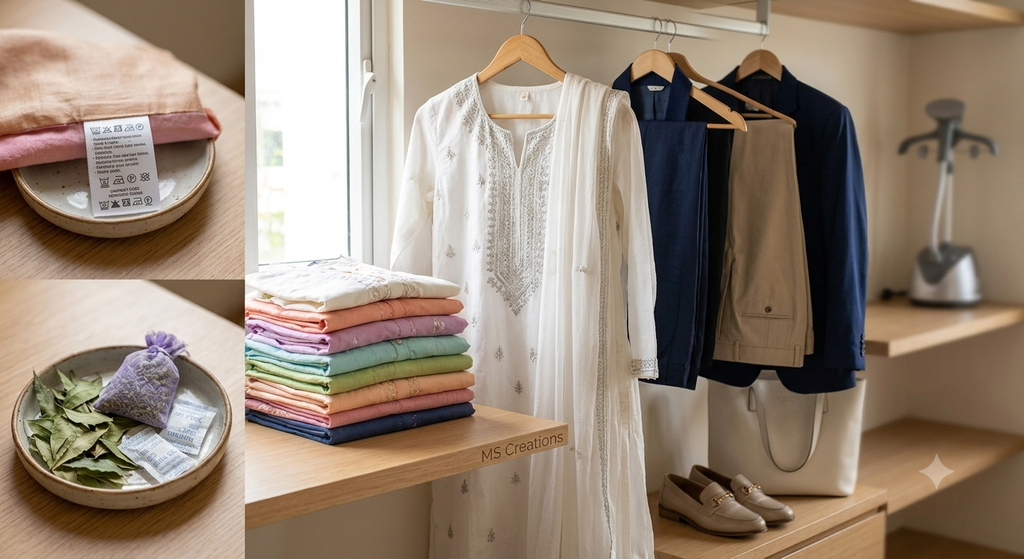
Before tossing anything into the laundry basket, spend five seconds checking the wash-care label stitched inside the side seam or neckline. These standardised textile care symbols
tell you the exact water temperature, washing method, and ironing heat the fabric can safely handle. Keeping a basic fabric care guide in mind ensures you never accidentally shrink natural fibres or scorch synthetic blends.
How to Wash Clothes Properly
Good laundry habits are the foundation of how to take care of clothes at home. Washing Tips on How to Take Care of Clothes are provided below. Follow these straightforward steps to protect every load:
- Sort by colour and weight: Separate dark shades from whites and pastels to stop colour bleeding. Keep heavy items like jeans away from lightweight tops so zippers and buttons do not snag softer weaves.
- Turn garments inside out: Flipping your clothes inside out before washing protects outer surfaces, prints, and dyes from friction inside the washing machine drum.
- Choose mild detergents: Harsh chemical powders strip natural oils from fibres and fade bright colours quickly. Switch to a gentle liquid detergent for everyday loads.
- Avoid over-washing: Not every outfit needs a full wash after a single wear. If you wore a dress or outer layer for just a few hours in an air-conditioned office, air it out on a hanger instead of washing it immediately.
Caring for Different Types of Clothing: A Practical Fabric Care Guide
Different outfits demand tailored attention, especially when dealing with Indian weather conditions like scorching summers and damp monsoons.
How to Take Care of Clothes: Cotton Essentials
Breathable cotton is a staple for college students and working professionals alike. Wash cotton pieces in cold or lukewarm water to prevent shrinkage. For new, brightly dyed cotton garments, soak them in cold water with a tablespoon of salt for fifteen minutes before their first wash to help lock in the dye.
How to Take Care of Clothes Made from Delicate Fabrics
Fabrics like chiffon, georgette, silk blends, and rayon lose strength when wet. Always hand-wash them gently in cold water using a mild shampoo or liquid wash. Never wring or twist delicate fabrics to squeeze out water; instead, press them gently against the side of the bucket.
How to Take Care of Clothes with Embroidery
Heavy zari, threadwork, sequins, and mirror work need extra protection. Hand-wash lightly embroidered pieces inside out, or opt for professional dry cleaning for heavily embellished festive wear. Never scrub directly over embroidery with a laundry brush.
How to Take Care of Clothes for Everyday Casual Wear
Your daily tees, trousers, and relaxed casual wear take the most frequent beating from sweat, dust, and repeated washes. Fasten all buttons and zip up zippers before washing so garments hold their tailored structure, and avoid overloading the washing machine so clothes have room to rinse cleanly.
How to Take Care of Clothes for Traditional Indian Wear
Ethnic silhouettes like flowing Anarkali kurta sets and vibrant Punjabi suits often combine rich dyes with delicate dupattas. Wash the dupatta separately from the kurta and bottom if it features contrasting borders or tassels, and always check for colour fastness on an inconspicuous corner first.
Common Laundry Mistakes to Avoid
Even with the best intentions, a few everyday habits quietly shorten the lifespan of your clothes:
- Using too much detergent: Extra soap does not make clothes cleaner. Excess detergent leaves behind a stiff residue that traps dirt and dulls fabric colours over time.
- Washing everything in hot water: High temperatures break down elastic fibres, shrink cotton, and accelerate colour fading. Stick to cold water for most regular loads.
- Ignoring small repairs: Washing a garment with a loose button or a tiny torn seam turns a two-minute fix into an unwearable outfit. Mend minor issues before laundering.
- Drying delicate pieces on high spin cycles: Aggressive machine spinning stretches necklines and weakens fine threads. Use a gentle cycle or skip the spin entirely for fragile items.
Proper Care While Drying
How you dry your laundry matters just as much as how you wash it. Intense afternoon sunlight in India acts like natural bleach—while great for sanitising white bedsheets, direct harsh sun will quickly fade dark kurtas and printed dresses.
Dry coloured and delicate garments inside out in a shaded, well-ventilated balcony. Avoid hanging heavy wet sweaters or knitted tops on thin wire hangers, as the weight of the water will pull the shoulders out of shape. Lay heavy knits flat on a clean dry towel instead.
How to Take Care of articles During Laundry
Proper clothes storage tips protect your wardrobe between wears, especially during humid monsoon months when moisture invites musty odours and mildew.
- Upgrade your hangers: Swap thin wire hangers for padded, wooden, or velvet hangers so structured formal wear and blazers maintain their shoulder shape without unsightly bumps.
- Fold heavy garments: Fold heavy embroidered outfits, pure silks, and thick woollens rather than hanging them, as gravity can stretch seams over months of storage.
- Wrap occasion wear in muslin: Store festive outfits and bridal or party wear wrapped in breathable pure white cotton or muslin cloth instead of plastic covers. Plastic traps moisture and causes yellowing or tarnishing of metallic threads.
- Keep wardrobes dry: Place neem leaves, silica gel packets, or camphor pouches wrapped in tissue in wardrobe corners during the monsoon to absorb excess humidity naturally.
How to wash Clothes carefully
If you want to know how to keep clothes looking new without constant shopping, build a few quick post-wear habits into your routine:
- Let clothes breathe: Never put worn clothes straight back into a closed cupboard. Hang them in an airy spot for an hour to release body heat and moisture.
- Treat stains immediately: Blot food or sweat stains with cold water as soon as they happen. Rubbing a stain pushes pigment deeper into the weave.
- Iron at the right temperature: Always iron delicate fabrics and printed outfits on the reverse side, or place a thin cotton pressing cloth between the iron and the fabric to prevent shine marks.
- Rotate your wardrobe: Avoid wearing the exact same two or three outfits every single week. Giving fabrics a rest between wears allows fibres to recover their natural shape.
Final Thoughts on Caring for Your Wardrobe
Mastering how to take care of clothes is one of the simplest ways to respect both your budget and your personal style. By following these practical clothing care tips—from reading fabric labels and washing gently to drying in the shade and storing thoughtfully—you ensure every piece in your closet stays comfortable, vibrant, and ready to wear.
At MS Creations, we believe great style blends traditional roots with modern expression. Whether you are dressing for a busy workday, a college lecture, or a festive celebration, thoughtfully crafted garments deserve thoughtful care. Explore our latest styles across the MS Creations collections to find timeless pieces designed to stay with you for years to come.
Frequently Asked Questions (FAQs)
1. How often should clothes be washed?
Innerwear, gym clothes, and outfits worn in heavy heat or sweat should be washed after every wear. However, outer layers like blazers, jeans, and lightly worn kurtas can be aired out and worn two to three times before washing, which reduces fibre wear and saves water.
2. How can I prevent clothes from fading?
Wash dark and brightly coloured clothes inside out in cold water using a mild liquid detergent. Always dry them in a shaded, airy space rather than direct afternoon sunlight to protect dyes from UV damage.
3. What is the best way to store delicate clothes?
Fold delicate or heavily embellished garments and wrap them individually in breathable white cotton or muslin cloth. Avoid plastic dry-cleaning bags for long-term storage, as they trap humidity and can discolour fine fabrics.
4. How should embroidered clothes be maintained?
Hand-wash lightly embroidered items inside out in cold water without scrubbing the threadwork, or choose dry cleaning for heavy zari and sequin work. Always iron embroidered outfits on the reverse side over a soft towel so the raised work stays intact.
5. How can I make my clothes last longer?
Sort your laundry properly, avoid harsh detergents and high-heat drying, treat stains immediately, and store garments on sturdy hangers or neatly folded in a dry wardrobe. Small, consistent habits extend fabric life significantly.